
Taurus New Moon (trigger warning - SV & CSA discussed - cause Algol)
May 16th, 4 pm EST
This New Moon in Taurus is conjunct both Algol (a fixed star), Mercury (the messenger) and the Sun. With Mercury having been Cazimi just the other day (Thursday), perhaps something has come to light in whatever realm Taurus occupies for each of us. Algol complicates things at this seeding point come Saturday, but personally I’m not into astrology for the pop culture fear mongering that often prevails.
I believe Algol (the demon star) can be a catalyst for a lot of positive growth, especially with some aspects at play (Moon sextile Jupiter and trine Pluto). In facing the dark edges of this moon and our own shadows/projections/fears/rage/inner demons etc. with loving kindness, we can free up a lot of vital energy (potentially).
Algol, “also known as Beta Persei, is a famous bright multiple star system in the constellation Perseus. Apparently, it is one of the first non-nova variable stars discovered, meaning stars that change in brightness due to intrinsic physical changes (pulsation, eruption) or extrinsic factors (eclipses), rather than explosive thermonuclear outbursts. Well known for its regular, visible dimming caused by an eclipsing binary system, it is seen as the eye of Medusa in Greek mythology”.
Medusa is a mortal
Gorgon- the word itself derived from the ancient Greek word
Gorgos meaning grim or dreadful which also comes from the same root as the Sanskrit word
Gorjana - meaning the guttural sound one makes (like the growling sound an animal might make when sensing threat).
In early Greek mythology, Medusa was depicted as a beautiful maiden (or a priestess), who was violated (raped) by Poseidon (the ancient Greek god of the sea/earthquakes/storms/horses ~ also brother to Zeus and Hades) in the temple of Athena. Instead of punishing Poseidon, Athena punishes and demonizes Medusa, turning her into a Gorgon with snakes for hair and a gaze that turned men into stone.
In this story there are themes of both violation and betrayal. Sadly a familiar story and one that continues to play out all too often in our culture (victim blaming). Instead of experiencing justice, Medusa is doubly betrayed and scape-goated by both Poseidon and Athena.
Medusa - demonized in her victim-hood, experiences further harm rather than repair, healing and care. Of course this myth and the star then brings us to the topic of rage. How could it not?
When violence is shoved under the carpet instead of faced and responded to appropriately, where does one’s anger go? It goes underground. But it doesn’t just disappear, it festers and comes out later in confusing ways - in disproportionate ways. It’s taken out of context and then often spills out on to the wrong people... Instead of turning everyone to stone, is there a better way to attend to our collective grief & rage rather than repressing it or misdirecting it?
I’m sure we can all think of ways these themes have been playing out on the world stage and maybe even in our own personal lives, whether historic or present, whether our own experiences or the experiences of those we love. Personally, I can unfortunately think of so, so many and there is some measure of beauty and relief in carrying this collective pain and grief together, as we do, instead of alone in isolation. It’s a collective problem we face, one that we have been facing for centuries.
It’s a common story and it’s also one that is deeply rooted in patriarchy and needs to be healed from all sides. Casting people out isn’t the way in my opinion, punishment isn’t the way, demonizing isn’t the way, scape-goating isn’t the way, victim-blaming isn't the way, revenge isn’t the way, further violence isn’t the way. How do we end sexual violence without creating more harm? This is a big, big question, likely to contend with over lifetimes.
According to Mia Mingus (an American writer, educator, and community organizer who focuses on issues of disability justice), if we wanted to lock all the people up who have been violent in some way, we’d be locking up most people. She explains this further in the following passage...
“If you look at literally most any study done within the last 15 to 20 years, all of the statistics, really no matter what form of intimate or sexual violence you’re looking at, are at epidemic levels. With child sexual abuse, we have estimates like 1 in 4 girls, 1 in 6 boys—those numbers are epidemic rates. And we know that child sexual abuse is one of the most underreported forms of violence.
When I say that it’s not just a couple of bad apples, it’s because I grew up in this type of work, seeing that it was my friend’s families, that it was people that I knew who were involved in intimate violence. I got a sense really early on that it’s not just like we can hunt out these couple of bad eggs and once we find them, we’ll lock them away in some prison cell and then everything will be okay.
The reality is that intimate and sexual violence is happening all the time. That it’s actually the norm in our society. When we look at those statistics, it’s most of us. If we’re going to lock up anybody who has ever been violent or done harm, we’d be locking up most people. We’d be locking up the people with whom we have relationships, our family members, our friends.”
In light of this reality, transformative justice is one viable solution, but it’s one that needs to be embedded in our culture from the get go (like in schools and places of employment, in the community etc.) and accessible to everyone and we’re not there yeT, far far from it. But we can get there someday I believe. Here is the whole thread/interview with Mia Mingus exploring this possibility for anyone else interested in reading through.
https://transformharm.org/tj_resource/ending-child-sexual-abuse-a-transformative-justice-handbook/
In just this one example between Medusa, Athena and Poseidon, think of how much less pain would have transpired for everyone if they had had access to a restorative circles process and a skilled facilitator (or two). SO much more healing is possible for everyone when we refuse to banish and cancel culture each other (whether victim or perpetrator) for having experienced or inflicted trauma/harm which are often (but definitely not always) two sides of the same coin.. So many lives spared, the domino effect potentially halted in it’s tracks and the cycle of abuse not repeated over and over again.
What other beautiful worlds are possible when we employ counter-culture strategies when it comes to responding to violence rather than the ones that continue to cause harm and eventually turns everyone to stone, symbolically anyway.
In the words of Chani Nicholas, “Medusa is not merely a monster, but a protector—a "wrath-some deity" who guards against the uninitiated and forces us to confront the deepest, most painful injustices of our world, turning them into a rallying cry for revolution”.
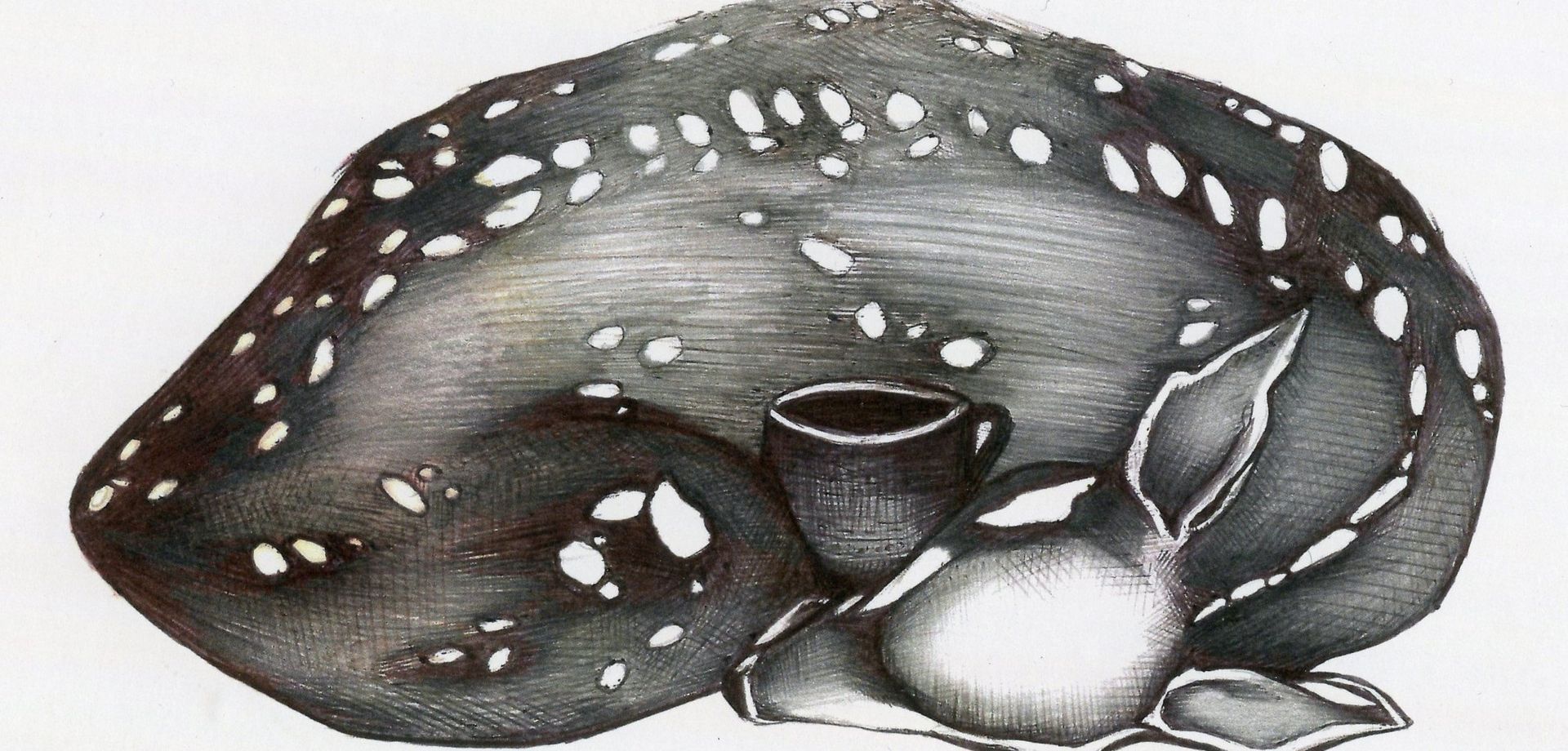
Another mythology that I think is worth employing to the aforementioned themes is the story of Buddha having tea with Mara (the Buddhist equivalent to the devil/evil/a demon etc.)
Tara Brach recounts this story in the following passage from her book “Radical Acceptance”...
“One of my favourite stories of the Buddha shows the power of a wakeful and friendly heart. The night before his enlightenment, the Buddha fought a great battle with the Demon God Mara, who attacked the then Bodhisattva Siddhartha Guatama with everything he had: lust, greed, anger, doubt, etc. Having failed, Mara left in disarray on the morning of the Buddha’s enlightenment.
Yet, it seems Mara was only temporarily discouraged. Even after the Buddha had become deeply revered throughout India, Mara continued to make unexpected appearances. The Buddha’s loyal attendant, Ananda, always on the lookout for any harm that might come to his teacher, would report with dismay that the “Evil One” had again returned.
Instead of ignoring Mara or driving him away, the Buddha would calmly acknowledge his presence, saying, “I see you, Mara.”
He would then invite him for tea and serve him as an honoured guest. Offering Mara a cushion so that he could sit comfortably, the Buddha would fill two earthen cups with tea, place them on the low table between them, and only then take his own seat. Mara would stay for a while and then go, but throughout the Buddha remained free and undisturbed.
When Mara visits us, in the form of troubling emotions or fearsome stories, we can say, “I see you, Mara,” and clearly recognize the reality of craving and fear that lives in each human heart. By accepting these experiences with the warmth of compassion, we can offer Mara tea rather than fearfully driving him away. Seeing what is true, we hold what is seen with kindness. We express such wakefulness of heart each time we recognize and embrace our hurts and fears.
Our habit of being a fair weather friend to ourselves—of pushing away or ignoring whatever darkness we can—is deeply entrenched. But just as a relationship with a good friend is marked by understanding and compassion, we can learn to bring these same qualities to our own inner life.
Pema Chödron says that through spiritual practice “We are learning to make friends with ourselves, our life, at the most profound level possible.” We befriend ourselves when, rather than resisting our experience, we open our hearts and willingly invite Mara to tea.”
Instead of pushing our intense feelings underground (our hurt, anger, sadness, fear, rage etc.) or demonizing others for their unsavoury actions, another strategy we might employ instead is simply being with this complex energy, befriending it even, giving it a place to exist because it's here anyway. We might try to understand it beyond the surface level. When it comes to any challenging emotion or tendency (greed, ignorance, fear, anger, lies, illusion, guilt, shame, violence etc.) there is often more at play than meets the eye and as Henry Wadsworth Longfellow says in a quote I love "If we could read the secret history of our enemies, we should find in each man's life sorrow and suffering enough to disarm all hostility.
Just some food for thought on the Taurus New Moon (tomorrow).