
April 23rd 2025
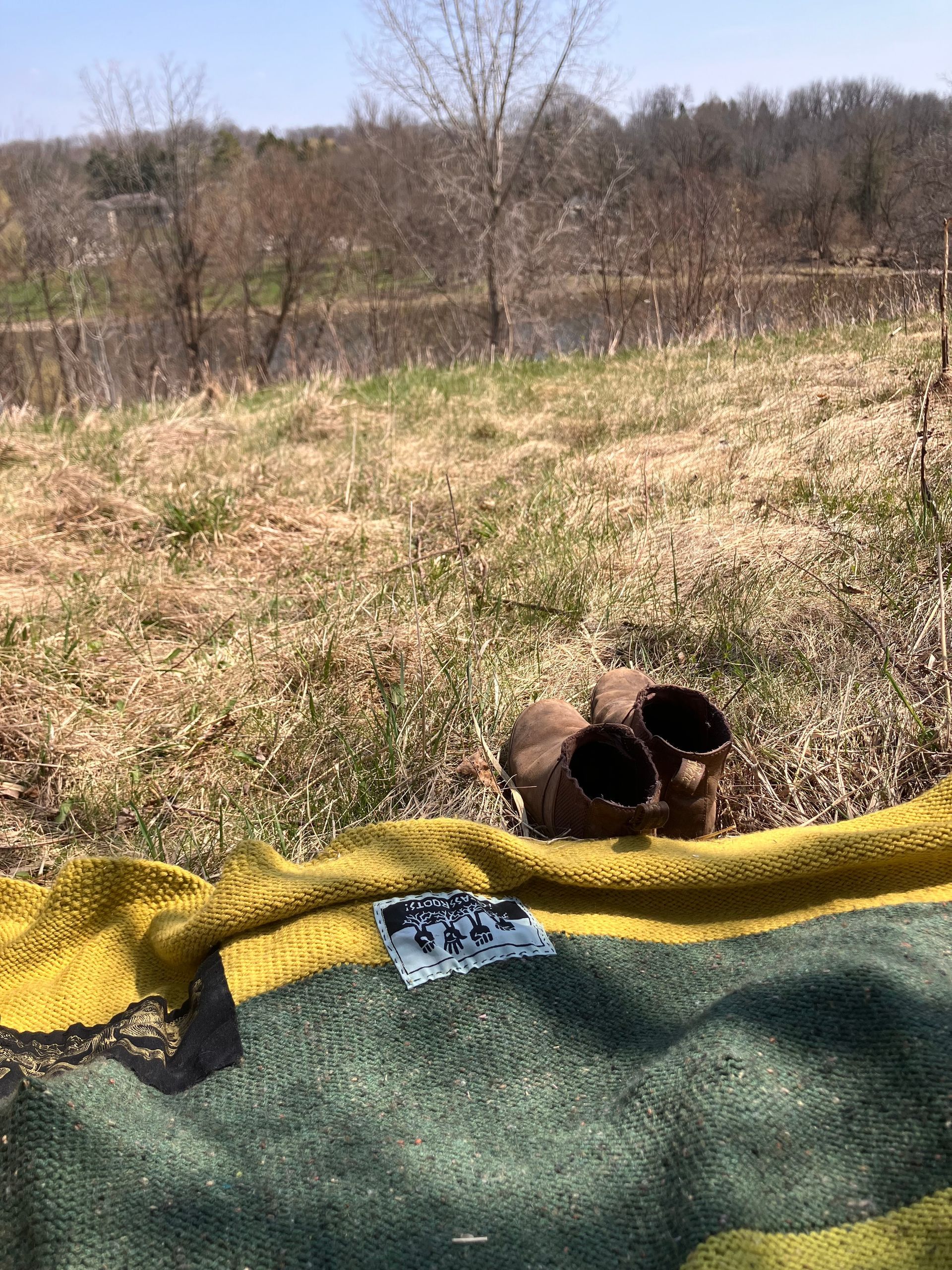
On the way to revisit my new sit spot across from the River and beneath the Hawthorn trees (there are actually two of them side by side or maybe just one that kind of looks like two) I get off my bike in favour of a slower pace and I notice what else is in bloom: bloodroot (not quite unfurled), ramps & trout lilies (just popping through), star magnolia (in full bloom). This is something Amara and their moon calendars taught me over the years, to slow down and notice the inter-connectivity of what’s in bloom, who is coming out of hibernation, who’s migrating through, what’s simultaneously being celebrated, how does this all connect to my own mood, the current moon phase (last quarter rn in Pisces with the back drop of Taurus season beginning) and what’s passing through us all.
I think of the flu that’s hit both my own house and the kids I also tend to as “work” these days (which I prefer to call just life) and how my sister said this morning this seems to always be the case around this time of year right after so many easter dinners have been consumed... kinda gross and good to remember and reminds me this is part of why I’m diving into the tree lore, because of all it will lead me to, namely my pagan roots as I don’t really celebrate the Christian holidays except for in a very light hearted consumerist way which feels completely devoid of meaning. Anyhow this is just the lead up to that period of time the Celts dedicated to the Hawthorn.
Philip Carr-Gomm describes this journey of re-connecting to our pagan roots for those of us who identify that way, as "shedding or attempting to shed the collective trance of consumerism following a movement towards the real, the now, this is the redemption of our repressed, collective, pre-Christian history". He goes on to say in this course I'm taking "Ancestral Lore and Nature Spirituality; Modern Druidry and the ancestral traditions of the British Isles, Ireland, and Brittany" that many of the problems we face in this day and age "stem from a sense of alienation, a sense of separation from nature and from our fellow humanity. And as a result, we’re capable of causing tremendous suffering both to each other and to the planet. So what is the cure? Well, I think many of us sense that the cure is to return, to follow that ancestral line, as it were, back to a spirituality that can feed us in our core so that we no longer feel alone, so that we feel connected with the past, connected with the future as well. The future of humanity and the future generations at one with the earth and her creatures." This really resonates with me personally, I feel this disconnection and I know it is part of a long lineage of suffering and causing others to suffer, especially when it comes to colonialism and how that is alive and well today.
So, I am priming myself for how to think and feel my way through studying these trees as I would imagine my ancestors did. I think of how interconnected we are through breath, how dependent we are on each other to live, how we kind of use them in so many ways now (for housing, for paper, for "things"). How we don't honour them as we should. I am reminded of the story of Sovereignty and how to be in right relation with these beings. Like how do they want to live their own lives?! I say this as a hypocrite, as someone who might have a hard time giving up books, bonfires and t.p. But I wonder how I can start to at least honour them more by consuming them less, by knowing their names and sitting quietly under them contemplating this more and more over time.
In the myth of Sovereignty, Sharon Blackie shares with us as an analogy (albeit one steeped in a binary) of a sacred marriage between the feminine and masculine principle related to reverence for the land, she explains that: "women want Sovereignty- to take up their ancient role of the moral and spiritual authority of the land. In our native myths and stories, Sovereignty represents the creative, regenerative, life-giving feminine principle, when it is balanced by the good masculine- when the goddess of the land enters into a sacred marriage with the true king of the people- then the land is fertile and the people safe from harm. In this story, then, Gawain, representing the masculine principle, doesn't need to resort to domination and control over the woman who represents the land. He has compassion, courtesy and honour enough to allow Lady Ragnelle to make her own choices and follow her own path; he feels no need to impose his choices upon her.
The story shows the feminine principle of Sovereignty being honoured; it also shows the 'good masculine' in practice. The 'good masculine' is essential to the functioning of a healthy, balanced world. In decrying the repression of the feminine in our culture, it can be all too easy not only to blame men for the mess the world is in, but to set ourselves against them. Men- our brothers, fathers, lovers, friends- are not always the enemy and to think of them as such would be like placing ourselves against half of nature, half of our own souls. Men too have cultural expectations foisted upon them, and, increasingly, they are speaking up about all of the ways in which Western rationalism has distorted their image of themselves." She goes on to share a bit about the grief of men and how intense the suicide rates are, perhaps a refusal to live up to the ideal standards society holds them to.
As much as I would prefer that Sharon not draw such rigid lines between the masculine and feminine qualities of humans or nature, I also see myself in the ways she describes the feminine being out of balance as well as the masculine qualities gone awry with some folks in my life (of all gender expressions). Sharon does speak a bit to breaking down the binary and seeing things as more complex than that but I long to see old myths that do as well and perhaps this can be a quest on my journey this year, to find those myths or to create them myself for future generations.
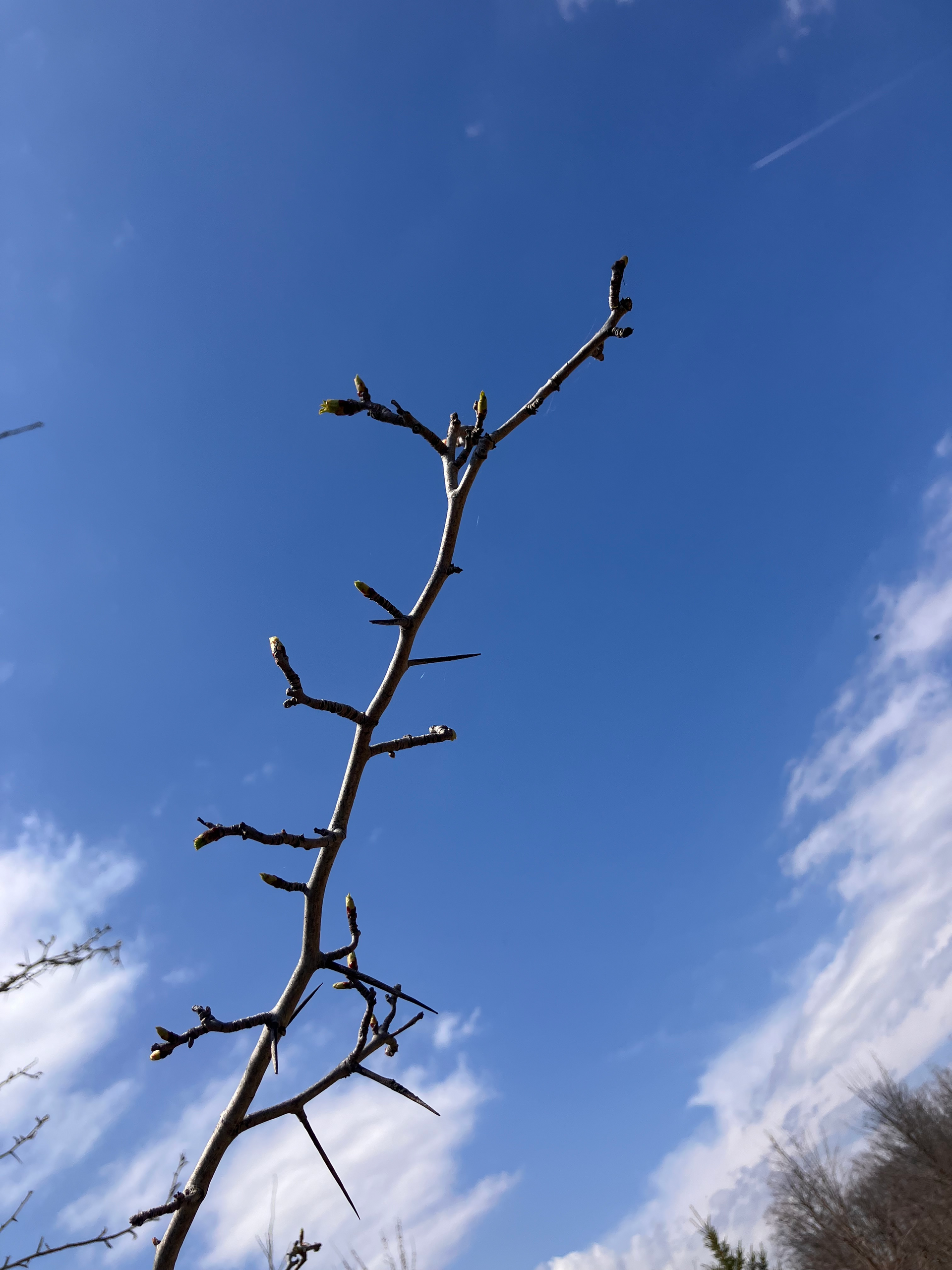
Back to the Hawthorns, I notice they have fresh green buds forming now. The birds I hear surrounding us today are: chickadees, grackles, a red bellied woodpecker, robins, blue jays, killdeer, an osprey, song sparrows, red wing black birds, a hermit thrush and I also see a few turkey vultures in flight hanging over the river prob looking for dead things which I am sure there is more of in plain sight with all the snow melting. In fact, there is no snow left here, but still some a few hours north of us.
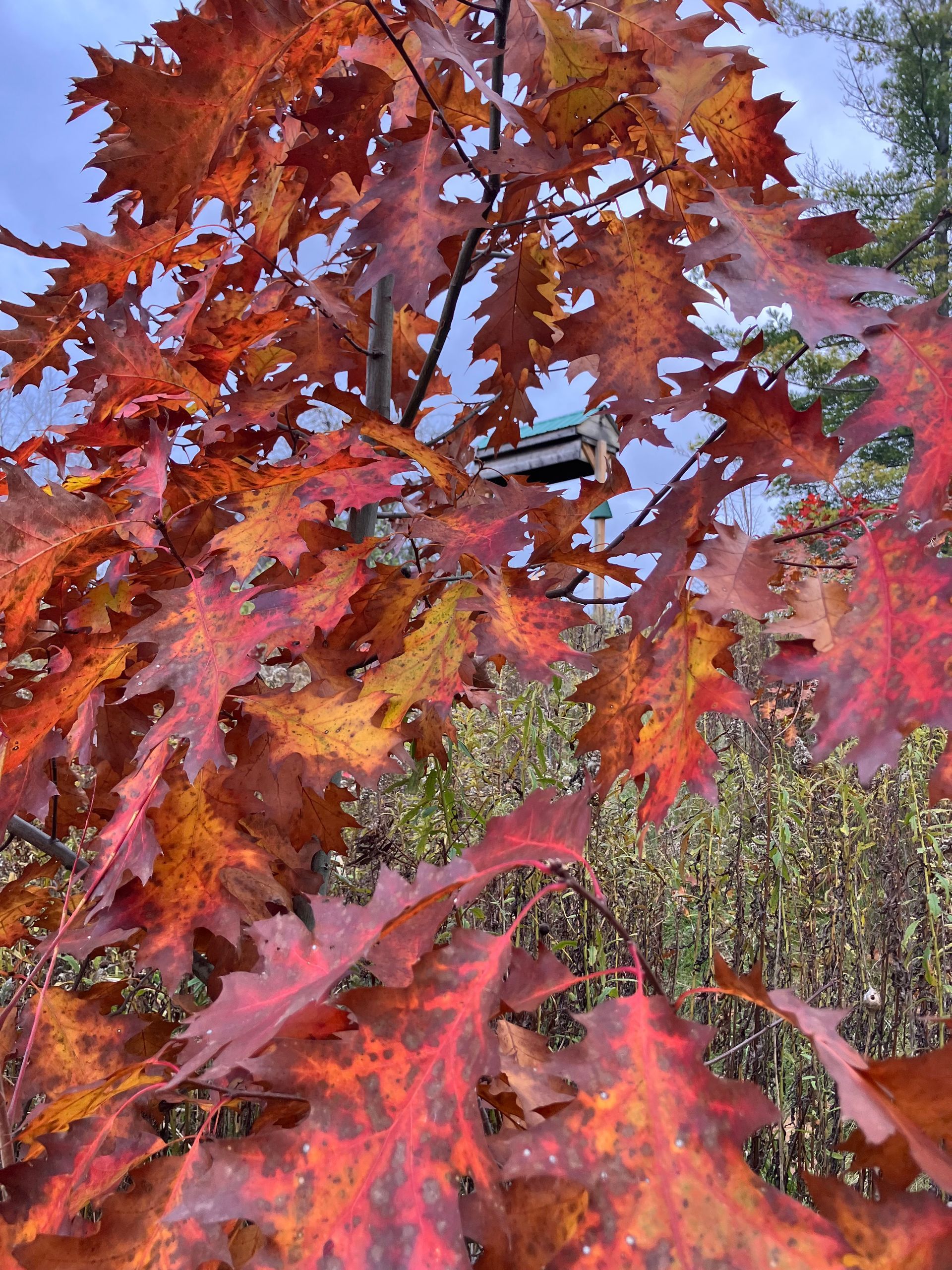
I also notice the plants growing beneath and around the hawthorns: bedstraw, goldenrods (dead ones), some kind of dicot I can’t quite identify. There are a few buckthorns and oak trees close by. The sun is warming the evergreens and a lovely scent hits me and fills me with gratitude for being here with this slow pace and feeling in good company with everything around me. I leave some peanuts behind for the chickadees in hopes they’ll remember me, I flick a tiny spider off my arm and pack up after quickly searching myself for ticks. One almost hitched a ride home with me last time...